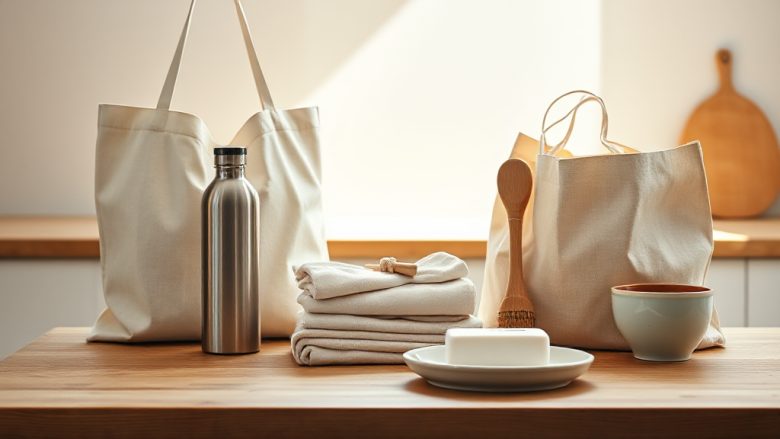
Zero waste swaps for beginners don’t begin with a perfect pantry or a shelf of matching glass jars. They begin with one swap you’ll actually repeat. That’s it. The movement gets sold as an aesthetic, but the reality is far less photogenic and far more useful: you notice something you throw away every week, you replace it with something reusable, and you keep going. Everything else is optional.
Most people fail at this because they try to overhaul their whole kitchen in a weekend, spend a fortune on specialty gear, and quit by Thursday. The smarter route is almost boring. Pick one thing. Do it until it’s automatic. Then pick the next. The five swaps below are ordered roughly by how little effort they demand, so start at the top if you’re unsure.
1. Swap bottled water for a refillable bottle you actually like
This is the easiest zero waste swap for beginners because it requires no behaviour change beyond carrying something. You already drink water. You already leave the house. The only difference is that the water comes from a tap instead of a shop. A single reusable bottle replaces hundreds of single-use plastic ones over a year, and the maths is embarrassing once you look at it: if you buy one bottle a day at roughly a pound, that’s over three hundred pounds annually for something that falls out of the tap for almost nothing.
The catch is that people buy ugly bottles they don’t enjoy using, then leave them at home. So buy one you genuinely like holding, with a lid that doesn’t leak in your bag. Stainless steel keeps water cold and survives being dropped. Glass looks lovely but is heavy and breakable. Insulated steel is the practical middle ground. Wash it properly every few days with hot water and a bottle brush, and don’t let it sit sealed with old water for a week, because that’s how bottles get a reputation for smelling. If you commute, keep a second bottle at work so you’re never caught out. That small piece of redundancy is what makes the habit stick.
2. Swap cling film and sandwich bags for beeswax wraps and containers
Cling film is one of those things nobody thinks about until they notice how much of it they’re binning. It’s used once, for a few hours, then thrown away. It can’t be recycled in most kerbside collections because it’s a thin, contaminated plastic film, and it clings to everything in the sorting facility. The swap is straightforward: reusable wax-coated cotton wraps for covering bowls and wrapping cheese or half a lemon, and lidded containers for everything else.
Beeswax wraps work by warming slightly in your hands, so they mould to the rim of a bowl and hold there. You wash them in cool water with a little mild soap, never hot, and never in the dishwasher, because heat strips the wax. They last around a year before they need refreshing, and you can refresh them by re-waxing, though most people just replace them. For sandwiches, a small lidded box beats a bag every time and doesn’t get squashed. For leftovers, glass containers with clip lids are the workhorse. They’re heavier than plastic, but they don’t stain, they don’t hold onto yesterday’s curry, and they last for years. Start with two wraps and three containers. That’s enough to cover most of what a household actually chills.
3. Swap paper kitchen roll for a stack of reusable cloths
Kitchen roll is a habit disguised as a necessity. You spill something, you tear off a sheet, you bin it. Repeat forty times a week without thinking. A pack of cotton or microfibre cloths, cut to roughly the size of a kitchen roll sheet, does the same job and goes in the wash instead of the bin. Keep a small stack in a drawer and a small bin or basket for the used ones. When the basket is full, it goes in with the towels.
The practical detail that matters here is having enough cloths to avoid running out mid-week. Twelve is a sensible starting number for a household of two or three. Colour-code them if you like: one colour for kitchen surfaces, another for bathrooms, so you’re not wiping a counter with something that cleaned a toilet. For greasy jobs, a dedicated cloth you don’t mind staining is better than ruining your nice ones. Old t-shirts and worn-out towels cut into squares work perfectly and cost nothing, which makes this the cheapest swap on the list. If you keep a few paper towels hidden at the back of a cupboard for genuinely grim messes, that’s fine. The goal is to reduce, not to be a martyr about a dropped egg.
4. Swap plastic sponges and scrubbers for compostable or long-lasting alternatives
Sponges are quietly one of the worst offenders in the kitchen. Most are made from synthetic foam and are replaced every couple of weeks, which adds up to dozens per household per year, all of it heading to landfill. The swap is to move towards something that either composts or lasts dramatically longer. Loofah sponges, made from a dried gourd, are genuinely compostable and work well for washing up. Cellulose sponges with a natural fibre scouring pad are another solid option and break down far faster than foam.
For scrubbing pans, a copper or stainless steel scourer lasts months rather than weeks and doesn’t shed microplastics into your washing-up water. Wooden dish brushes with replaceable heads are the long-game choice: you keep the handle and swap only the bristle head when it wears out, which cuts the waste down to a fraction. The one thing to watch is hygiene. Any sponge or cloth left damp and warm becomes a bacterial playground within days. Rinse it thoroughly after each use, squeeze it out, and let it dry somewhere airy rather than in the bottom of the sink. Rotate two sponges so one is always drying. That single habit extends their life considerably and keeps the swap from becoming a health problem.
5. Swap liquid soap and shampoo bottles for bar versions
Bathroom bottles are the last frontier for a lot of beginners because the swap feels like it might compromise your hair or your skin. It usually doesn’t, once you find the right bar. A bar of soap in a dish replaces a plastic pump bottle, and a shampoo bar replaces a shampoo bottle. There’s no plastic, no pump mechanism, no label, and no half-empty bottle lurking at the back of the shower. Bar soap also tends to last longer per gram than liquid, so the cost per wash is often lower, not higher.
The trick is to store bars properly. A bar sitting in a puddle of water dissolves into slime within a week, which is why so many people think bar soap is messy. Use a draining dish or a soap saver pad so water runs off and the bar dries between uses. For shampoo bars, lather it in your hands first rather than rubbing it directly on your scalp, especially if you have long hair, because it distributes more evenly and uses less product. If you have hard water, expect a transition period of a week or two while your hair adjusts; a diluted apple cider vinegar rinse helps some people through it. Conditioner bars exist too, and they’re worth trying once you’ve settled on a shampoo bar you like. Keep a small tin for travel and you’ve solved two problems at once.
None of this needs to happen at once. Pick the swap that costs you the least effort, do it until you stop thinking about it, and let the next one follow. Zero waste isn’t a personality. It’s just a series of small decisions you stop having to make.