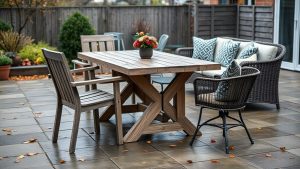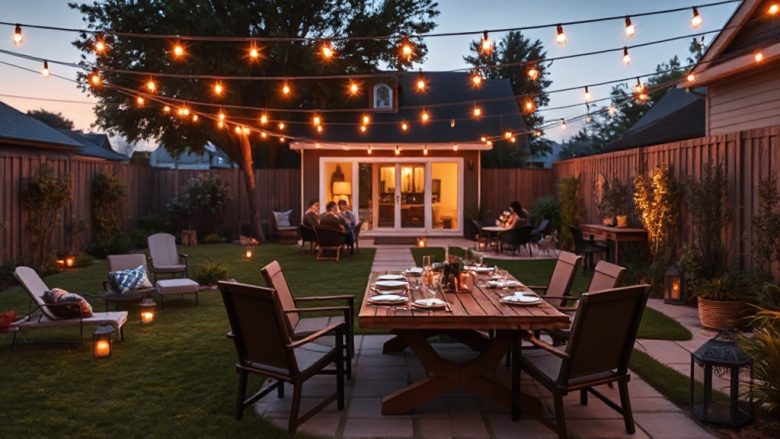
I still think about a late-summer barbecue at a friend’s place a few years back. Nothing fancy. A folding table, mismatched chairs, a string of bulbs draped through the apple tree, and a cooler of drinks that never ran dry. People stayed until the candles burned out. Compare that to a party I went to where every cushion was fluffed, every glass matched, and the host spent the whole evening rearranging the cheese board. Everyone left early. That contrast taught me more about backyard ideas for entertaining guests than any glossy magazine spread ever did.
The truth is, a beautiful yard and a party-ready yard are two different things. One is about how it looks when nobody’s there. The other is about how it feels when eight people are standing in it, holding plates, looking for somewhere to sit. This guide walks through the second kind, stage by stage, without assuming you have a landscaper on retainer.
Start With Zones, Not Furniture
Before you buy anything, walk your yard and ask where people will naturally gather. Most backyards already suggest an answer. A patio slab, a flat patch of lawn, a corner that catches the evening sun. That’s your anchor.
From there, think in zones rather than one big open space. A seating zone, a dining zone, and a standing or mingling zone are usually enough. They don’t need walls between them, just a change in surface or a piece of furniture that signals the shift. A rug under the seating area does this quietly. So does turning chairs to face each other instead of lining them along a wall.
The mistake I see most often is a single long table plonked in the middle of everything. It works for dinner, then becomes an obstacle for the rest of the night. If your space allows, push dining to one side and keep the middle open. Open floor is what lets people drift, refill a glass, and find a new conversation without squeezing past anyone.
Measure before you commit. A seating circle needs roughly a metre of walking space around it to feel comfortable. Less than that and guests perch awkwardly rather than settle in.
Seating That Invites People to Stay
Comfort beats style every single time. A hard bench looks lovely in photos and empties within twenty minutes. If you want guests to linger, prioritise a few things.
Mix heights and types. Some people want to sink into something low. Others prefer an upright chair where they can balance a plate. A couple of lightweight stools that can be moved around are worth more than one expensive statement piece, because they let guests solve their own seating problem instead of asking you for a chair.
Cushions matter more than the frame underneath them. Even a basic wooden bench becomes a favourite spot with a thick pad on it. Keep a stack of spare cushions in a weatherproof box nearby so people can help themselves.
And don’t forget the ground. If your gathering skews casual, a blanket or two on the grass gives younger guests and relaxed adults somewhere to land. It also takes pressure off your chair count, which is handy when more people turn up than you expected.
One practical note: arrange seating in loose clusters of three or four rather than one giant ring. Big circles split into two conversations anyway, and the people stuck in the middle end up talking to nobody.
Lighting Does More Work Than You Think
Lighting is the single cheapest way to change how a backyard feels after dark. It’s also the thing most hosts leave until the last minute, then solve with one harsh overhead light that makes everyone look like they’re being interviewed.
Aim for layers instead. Warm string lights overhead create a ceiling and make a space feel enclosed without walls. Low lights near the ground, whether lanterns, stake lights, or candles in jars, guide feet along paths and stop people tripping over planters. A couple of brighter spots near the food and drinks table help guests serve themselves without squinting.
Keep colour temperature warm. Cool white light reads as clinical outdoors. Warm white or amber feels like a continuation of the day rather than an abrupt end to it.
If you want the simplest possible upgrade, buy a few rechargeable table lamps and place them on side tables and steps. No wiring, no extension leads across the lawn, and you can move them wherever the party drifts. Just remember to bring them in before it rains.
Also consider light where people actually need it, not just where it looks good. Steps, the route to the bathroom, and the bin area all deserve a little illumination. Guests notice when they can find things without asking.
Food, Drink and Flow
How you serve food shapes how people move around your yard. A single table with everything on it creates a queue and a bottleneck. Splitting things up solves most of it.
Put drinks in one spot and food in another, ideally on opposite sides of the space. That way people circulate rather than clump. Keep plates, napkins, and cutlery at the start of the food table so guests aren’t doubling back. A second, smaller surface for dirty plates saves you from chasing crockery all evening.
Think about what survives being eaten standing up. Anything requiring a knife and a steady hand is a gamble. Skewers, small flatbreads, dips with sturdy vegetables, and things that can be picked up with one hand tend to work better than a formal plated meal.
Drinks deserve the same thought. A jug of something batch-made means you’re not playing bartender all night. Keep water visible and easy to reach, because people drink more of it when it’s not hidden, and that keeps the evening going longer in a good way.
If you’re short on surfaces, a sturdy bench or an upturned crate with a board on top does the job. Nobody remembers the table. They remember not having to balance a plate on their knee.
One more thing about flow: leave a clear route from the house to the gathering area. If guests have to navigate a narrow gap between furniture to get outside, they’ll hover near the door instead of settling in.
Small Touches and a Start-Small Plan
You don’t need to do all of this at once. In fact, doing it all at once is how people end up with a yard that looks finished but never gets used.
Start with one zone. Get the seating right, live with it for a few weekends, and notice where people actually stand. Then add lighting. Then sort out a second surface for food and drinks. Each stage teaches you something the previous one couldn’t.
Small touches that punch above their weight include a basket of blankets for cooler evenings, a bin placed where people can actually find it, and a spot to put drinks down within arm’s reach of every seat. That last one sounds trivial and isn’t. Guests who have nowhere to rest a glass tend to hover, and hovering guests leave early.
Music helps too, but keep it low and keep it optional. A small speaker at conversational volume fills gaps in the evening without forcing anyone to shout. If you can, position it away from the seating so the people nearest it aren’t stuck in a cone of sound.
Weather is the one thing you can’t plan, so plan around it instead. A tarp, a pop-up shelter, or even a few large umbrellas turn a washout into a story rather than a cancellation. Have a fallback for cold too. A fire bowl or a patio heater extends your entertaining season by weeks on either end, and a fire gives people a natural place to gather once the food is done.
Finally, resist the urge to over-schedule. The best backyard gatherings I’ve been to had no agenda at all. Food appeared, drinks stayed cold, and the yard did the rest. Your job is to remove friction, not to direct the evening.
So here’s a simple checklist to run through before your next gathering. Seating arranged in clusters with room to walk between them. Lighting layered, warm, and present on paths and steps. Food and drinks split across two areas with plates at the start. A clear route from the house. Blankets, a bin, and somewhere to set a glass within reach of every seat. Get those right and the rest is just people enjoying themselves, which was the point all along.